
Patios and Walkways
Walkway Installation in Lansing
Front walks, garden paths and replacement walkways in pavers, natural stone or flagstone, built on a solid, well-drained base for Lansing's freeze-thaw winters.
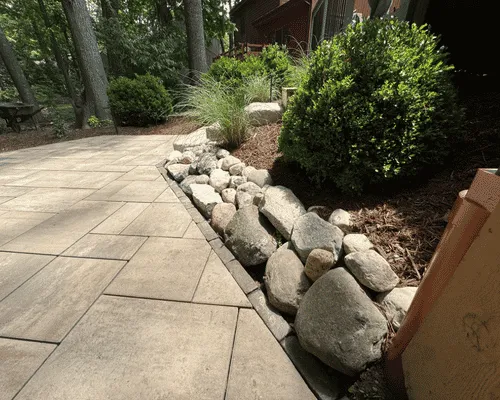
Walks and Paths
Walkway Installation for Front Entries, Side Yards and Gardens
Your walkway is the part of the landscape you use most, so it has to work as well as it looks. Pinnacle Landscape Group builds walkways in pavers, natural stone or flagstone, depending on the look you're after, from the main walk at your front door to informal paths through the garden.
We lay out and build your walk with the same crew, so nothing gets lost in translation between the plan and the finished path. Walkway work covers:
- Front entry walks from the driveway to the door
- Garden paths that wind through beds and connect parts of the yard
- Side-yard paths to a backyard patio or gate
- Replacement walks where an old one has heaved, cracked or settled
- Stone slab steps where the walk changes grade
- Clean tie-ins where the walk meets the driveway, porch and lawn
Replacement Signs
Signs Your Front Walkway Needs Replacing
Old walks rarely fail all at once. Michigan winters are hard on concrete, and a walk poured over a poor base tends to lift and crack a little more with each freeze-thaw season. Once a walk has heaved or settled enough to trip on, patching rarely fixes it for long, because the real problem is underneath. Watch for these signs:
- Slabs that have heaved, sunk or tipped at the joints
- Cracks wide enough to catch a heel or a snow shovel
- A spot you step around whenever you come home
- Puddles or ice that sit on the walk instead of draining off
- A walk too narrow for two people side by side
- Steps that have settled or pulled away from the walk
- An old walk that looks dated next to newly redone landscaping
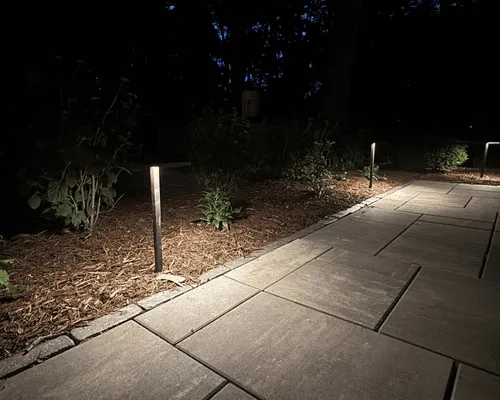
Layout
How Wide Should a Front Walkway Be?
A front walk around four feet wide lets two people walk side by side, which is what makes an entry feel welcoming instead of cramped. Garden paths can be narrower, since they're usually walked single file, and about three feet is comfortable for most.
The route matters as much as the width. People take the shortest way to the door, so a walk that sends them out of their way gets cut across, and the lawn wears a path beside it. A straight walk suits a formal, symmetrical house. A gentle curve can work better when a straight line doesn't fit the property, as long as it stays close enough to the direct route that nobody is tempted to take a shortcut.
Small details make a big difference too. Widening the walk where it meets the driveway gives people stepping out of a car a landing spot. Laying a garden hose along a proposed route and walking it a few times is an easy way to see how a new path will feel before anything gets dug.
Materials
Paver, Flagstone or Natural Stone: Which Walkway Material Is Right for You?
The right material depends on your house, the rest of your landscape and how the walk gets used, especially in winter. Matching a walkway to a paver patio or a flagstone patio ties the yard together, but each material has its own strengths:
Pavers
A flat, even surface that's easy to walk and easy to shovel, with plenty of colors and shapes to choose from. Smaller pavers follow curves easily, while large-format pavers give a straight walk a bold, contemporary feel.
Flagstone
Irregular slabs of natural stone with an informal, old-world feel, well suited to older homes, cottage gardens and wooded lots. Uneven stone edges can catch a shovel blade, which matters more on a front walk than on a garden path.
Natural Stone
Cut stone and large stone slabs give a walk the look of real stone with a more even, tailored surface than flagstone. Stone also makes a handsome border, like fieldstone edging a paver walk along a mulch bed.
Built for Winter
How Is a Walkway Built to Stay Flat Through Michigan Winters?
Frost heave is one of the main reasons walks around Lansing go uneven. Water in the soil under the walk freezes and expands, lifting whatever sits on top, then thaws and lets it back down unevenly. Over enough winters, that's how a smooth walk turns into a row of trip edges.
A well-built walkway starts by digging out soft soil and roots, then building back up with a gravel base compacted in layers so it drains instead of holding water. The edges need to be held firmly in place, because a narrow walk has a lot of edge for its size and any spreading is easy to see. The surface is pitched slightly to one side so rain and meltwater run off, since a walk that holds water turns into a sheet of ice in January.
Once the walk is in, winter brings its own work. Our ice management handles that side of the season, salting and treating walks after the snow is cleared so they're safer underfoot, at home or on a commercial property.
Tie It Together
Walkway and Garden Path Ideas That Tie Your Yard Together
A good walkway does more than get you to the door. A path from the driveway around the side of the house can lead guests straight to a backyard patio, and a garden path can turn a stretch of beds into a place you actually walk through. Using the same paver or stone for the walk and the patio makes the whole yard read as one design.
The edges are what finish it. Planting beds along a walk soften its hard lines, and fresh mulch with a crisp bed edge makes a new walkway look like it belongs there from the start. Whether it's a front walk in East Lansing or a garden path in DeWitt, we can look after the beds and lawn along it once it's built, too.
FAQ
Walkway Installation FAQ
Why does ice keep forming in the same spot on my walkway?
Usually because water keeps reaching that spot, from a downspout emptying onto the walk, a sunken section that collects meltwater, or a stretch pitched the wrong way. Salt treats the ice, but redirecting the downspout or rebuilding that stretch with the right slope deals with the cause.
Is de-icing salt safe on a paver or stone walkway?
Rock salt used in moderation is generally fine on good-quality concrete pavers. Some natural stone is more sensitive, especially softer, more porous stone, where salt that soaks in and dries can make the surface flake over time. Clearing snow before it packs down means less salt is needed in the first place.
Do I need steps if my front walk runs up a slope?
On a gentle slope, a walk can simply follow the grade. Once the slope gets steep, a sloped walk turns slick in winter, and a few steps with landings between them are safer and more comfortable. Outdoor steps feel most natural with low, even risers and treads deep enough for a full stride.
Can a walkway go in close to a big tree?
It can, but it's worth giving the tree room. Digging a base cuts through the shallow roots that spread well beyond the trunk, and cutting big roots close to the tree can harm it, so walks near large trees are often routed a little farther away. Roots that keep growing under a walk set too close can also lift it over time.

Get Started
Contact Us
Tell us about your property and what you have in mind, and our team will get back to you.
All Week: 6 AM to 6 PM
Contact Us
Tell us about your property and what you need, and our team will get back to you.