
Patios and Walkways
Paver Patio Installation in Lansing
Paver patios designed and built from the base up, turning an unused Lansing backyard or a cracked old slab into a flat, usable outdoor space.
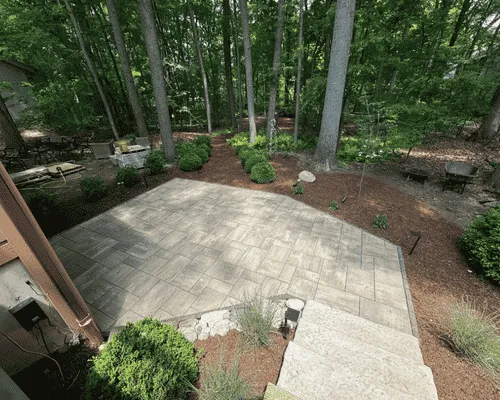
Base First
What Goes Into a Paver Patio That Holds Up to Michigan Winters?
A paver patio is only as good as what's underneath it. Here in mid-Michigan, water in the soil freezes and expands, then thaws and settles, over and over through the winter. A base that's too shallow or poorly compacted lets that movement reach the surface, and after a couple of winters the patio starts to heave, dip and rock, no matter how nice the pavers on top are.
At Pinnacle Landscape Group, the same crew handles the design, layout, excavation, base work and installation, so nothing gets handed off between the people who plan your patio and the people who build it. Here's what a properly built paver patio involves:
- Digging out topsoil and roots down to firm, stable ground
- A crushed stone base compacted in layers, not all at once
- A thin, level bedding layer for the pavers to sit in
- Edge restraint around the outside to keep pavers from spreading
- A gentle slope away from the house so water runs off
- Filled joints that lock the pavers together
Is It Time?
Signs Your Backyard Is Ready for a Paver Patio
Most patio projects start with a backyard that isn't pulling its weight. Maybe it's just grass with nowhere to put a table, or an old concrete slab that has cracked and tipped over the years.
A patio can also be part of the fix for a drainage problem, since it's built with a slope that carries water away from the house. If any of these sound familiar, a paver patio is worth a look:
- The backyard goes unused because there's nowhere to sit
- An old concrete slab has cracked, heaved or sunk
- The grass by the back door is worn down to dirt
- Water runs toward the house or pools in the same spot after rain
- Your patio furniture wobbles on uneven ground
- You want a place to grill, eat and gather that feels like part of the house
Design
How Big Should a Paver Patio Be?
Size a patio around how you'll actually use it, not around a number. A dining table needs room for chairs to slide back without dropping off the edge, which usually means about three feet of patio beyond the table on every side. A grill wants its own corner, clear of the siding and the main path, and a seating area with lounge chairs takes more room than most people expect.
Shape and placement matter just as much. A patio that steps straight out from the back door gets used, while one tucked in a far corner often doesn't, and the route between the door, the patio and the yard should feel natural to walk.
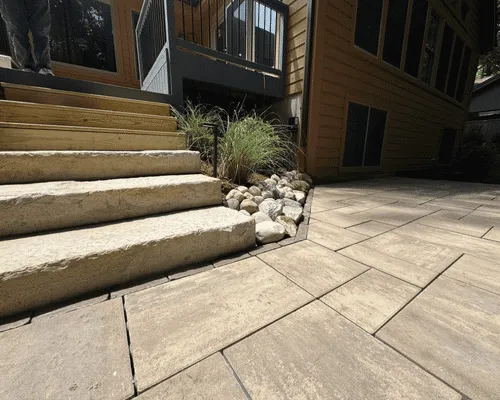
Pavers come in a wide range of shapes, colors and sizes. Large-format pavers give a clean, modern look with fewer joints, while smaller pavers laid in a mixed pattern feel more traditional. Where the patio meets a door or a change in grade, stone slab steps make an easy, solid transition.
Pavers or Stone
Paver Patio or Flagstone: Which Is Right for Your Home?
Both pavers and natural flagstone make a great patio, and the right choice comes down to the style of your home, how you'll use the space and your budget. If natural stone appeals to you, take a look at our flagstone patio installation as well. Here's how the two compare:
Paver Patios
Manufactured pavers have a consistent size and thickness, so the finished surface is flat and even, which suits dining sets and grills. They also cost less per square foot than flagstone, so the same budget usually covers more patio.
Flagstone Patios
Natural stone in irregular shapes, each piece a little different in tone and texture, with a look that suits older homes, wooded lots and naturalized plantings. Fitting every stone by hand takes more labor, which is a big part of why flagstone costs more.
Build Season
When Should You Build a Paver Patio in Michigan?
Patios get built when the ground isn't frozen, which around Lansing means spring through late fall. Base work needs soil that can be compacted properly, so a stretch of soggy spring weather can hold things up until the ground dries out.
Summer and early fall are usually the easiest stretch for patio work. The ground tends to be firm and dry, and a patio finished in fall is ready and waiting the first warm weekend of spring.
Plan for the lawn around it, too. Digging out a patio and hauling base material through the yard can leave some turf torn up along the way. Late summer to early fall is the prime window for seeding in mid-Michigan, and outside that window, fresh sod gives you a finished lawn around the new patio instead of bare dirt.
Finishing Touches
Landscaping Around a New Paver Patio
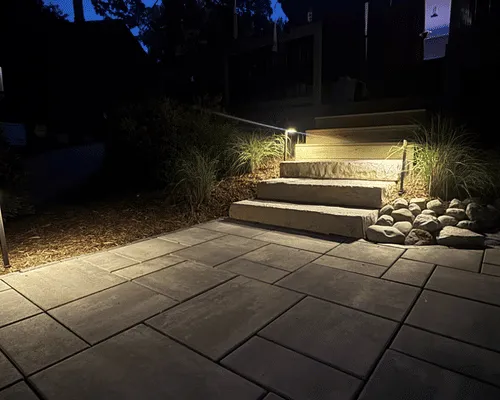
A patio looks finished when the yard around it is finished too. Mulch beds with boxwoods or perennials soften the edges and tie the patio to the house, and a fresh layer of mulch makes the whole space look sharp from the start.
Getting there matters as well. A paver walkway from the driveway or side gate keeps guests from cutting across the lawn to reach the patio, and matching the pavers ties the two together.
Because we're full service, the crew that builds your patio in Okemos or Holt can also take care of the beds and lawn around it afterward. That keeps the whole backyard in one set of hands, from the first shovelful of dirt to the regular mowing that follows.
FAQ
Paver Patio Installation FAQ
Can a paver patio be repaired if part of it sinks?
Usually, yes. Pavers aren't mortared together, so a low spot can be lifted out, the base underneath re-leveled and the same pavers set back in place. That's one of the big advantages of pavers over poured concrete.
Do paver patios need to be sealed?
Sealing is optional. A sealer can deepen the color and make spills easier to clean up, but plenty of patios go unsealed, and any sealer wears and needs reapplying over time.
Why do weeds and ants show up between pavers?
Weed seeds sprout in the dirt and leaf litter that collect in paver joints, and ants tunnel into joint sand, especially where it has washed out or settled low. Keeping the joints topped up and sweeping the patio regularly cuts down on both.
Can pavers go over an existing concrete patio?
Sometimes, if the slab is solid, flat and sheds water well. A slab that has already cracked or heaved will pass that movement up into the pavers, though, so in Michigan a slab that has shifted with the frost is usually better removed and replaced with a properly built base.
Do darker pavers get hotter in the sun?
Yes. Darker colors absorb more heat and can get uncomfortable underfoot on a sunny July afternoon, while lighter pavers stay cooler. It's worth thinking about for a patio that gets full afternoon sun.

Get Started
Contact Us
Tell us about your property and what you have in mind, and our team will get back to you.
All Week: 6 AM to 6 PM
Contact Us
Tell us about your property and what you need, and our team will get back to you.